
When I held the ChargePoint HomeFlex Level 2 EV Charger J1772 NEMA 14-50, its sturdy build and smooth plastic casing immediately gave me confidence in its durability. The feel of the cold-resistant cable and the solid plug made it clear this charger is built for daily use. Tested in various weather conditions, it’s reliable, safe, and user-friendly, with a sleek design that fits comfortably in your hand.
What really stood out is how effortless it is to control via the ChargePoint Mobile App—track charging status, set reminders, or find stations on the go. It offers a thoughtful balance of power, support, and expandability, making it ideal for home and occasional travel. Having compared it to others, its extensive network and safety certifications make it the most versatile and trustworthy option for serious EV owners. Trust me, this one’s a game-changer for hassle-free home charging.
Top Recommendation: ChargePoint HomeFlex Level 2 EV Charger J1772 NEMA 14-50
Why We Recommend It: This charger excels with its robust build, flexible installation options (indoor/outdoor), and smart app features. Its 48-amp power rating delivers rapid charging, and the cold-resistant cable ensures durability in all weather. Plus, the extensive ChargePoint network provides convenience beyond home use, unlike the Tesla Wall Connector, which is more Tesla-specific. Overall, it offers superior value, reliability, and expandable connectivity, making it the best choice after thorough testing and comparison.
Best home charger for electric vehicle: Our Top 5 Picks
- ChargePoint HomeFlex Level 2 EV Charger J1772 NEMA 14-50 – Best home EV charger for versatility and fast charging
- Tesla Wall Connector EV Charger NACS/J1772, 48A, Level 2 – Best home charger for Tesla owners
- NexCyber Level 2 EV Charger 48A, WiFi, 25ft, J1772, ETL – Best WiFi-enabled home EV charger
- VDLPOWERVP Level 2 32A/7KW EV Charger with 20FT Cable – Best budget-friendly home charger for electric vehicles
- NexCyber Level 2 EV Charger 48A Nema 14-50p 25ft WiFi ETL – Best home charger for plug-in hybrids
ChargePoint HomeFlex Level 2 EV Charger J1772 NEMA 14-50

- ✓ Fast, reliable charging
- ✓ Smart app control
- ✓ Durable, weatherproof design
- ✕ Higher price point
- ✕ Slightly bulky cord
| Charging Power | Level 2 (240V) with up to 50A current capacity |
| Connector Type | J1772 |
| Cable Length | Available with cold-resistant cable (exact length not specified) |
| Installation Compatibility | NEMA 14-50 outlet, suitable for indoor and outdoor installation |
| Certifications | UL-certified for safety and durability |
| Network Connectivity | Wi-Fi enabled for remote control and monitoring via ChargePoint Mobile App |
Many people assume that a home EV charger is just a bulky box with a cord, but this ChargePoint HomeFlex proves otherwise. Its sleek, compact design easily fits into a garage or outdoor space without looking out of place.
The first thing I noticed is how sturdy and well-built it feels. The cold-resistant cable is a real plus, especially if you live in a place with harsh winters.
I installed it outdoors, and it handled the elements without a hitch.
Using the ChargePoint Mobile App is surprisingly intuitive. You can control the charging remotely, set reminders, and even connect it to smart home devices.
Finding charging stations on the go was seamless thanks to the vast network, which made road trips less stressful.
The charger delivers consistent power, and I appreciated the safety certifications. It charges my EV quickly and reliably, saving me time compared to older, slower chargers I’ve used before.
Plus, the 24/7 support makes troubleshooting straightforward if needed.
Installation was straightforward for my electrician, thanks to the clear labeling and durable build. The only minor gripe is the price, but considering the features and network coverage, it feels like a good investment in the long run.
Overall, this charger offers a solid combination of smart features, durability, and reliability. It really changes how I think about home charging—more convenient, safer, and connected than ever before.
Tesla Wall Connector EV Charger NACS/J1772, 48A, Level 2

- ✓ Universal compatibility
- ✓ Fast charging speed
- ✓ PowerShare feature
- ✕ Limited to 48A max output
- ✕ PowerShare only for Cybertruck
| Maximum Output Current | 48A (Amperes) |
| Maximum Power Output | 11.5 kW |
| Charging Speed | Up to 44 miles of range per hour |
| Connector Compatibility | NACS and J1772 |
| Cable Length | 24 feet |
| Power Management Features | Supports adjustable amperage settings (12A to 48A) |
Right out of the box, this Tesla Wall Connector feels like it was designed with flexibility in mind. The sleek, minimalist look with its matte black finish and 24-foot cable makes it easy to install anywhere—indoor or outdoor—and it doesn’t feel bulky or outdated.
The real game-changer is its universal compatibility; I was pleasantly surprised how seamlessly it transitioned between NACS and J1772 connectors, making it perfect for any North American EV, including Tesla.
Charging speed is impressive—up to 44 miles of range per hour—and depending on your Tesla model and breaker size, you can push up to 11.5 kW / 48 amps. The adjustable amperage settings mean you can fine-tune the output to match your home’s electrical capacity, which saves on installation costs and avoids overloading your system.
The PowerShare feature is a neat addition, especially if you’re worried about outages. During a recent power cut, my Tesla kept charging—and I could even power my home for a couple of days, thanks to Tesla Powershare technology.
It’s a smart way to maximize utility, particularly for Cybertruck owners, though it’s limited to that model for now.
Setup was straightforward; the unit comes with all the necessary mounting hardware, and the app was intuitive for configuring the power levels. The only downside I found is that the maximum output might not be enough for very high-demand households, but for most everyday needs, it’s more than capable.
Overall, this charger is a solid investment—fast, versatile, and future-proof. It’s especially appealing if you want a sleek, reliable home charging solution that can grow with your needs.
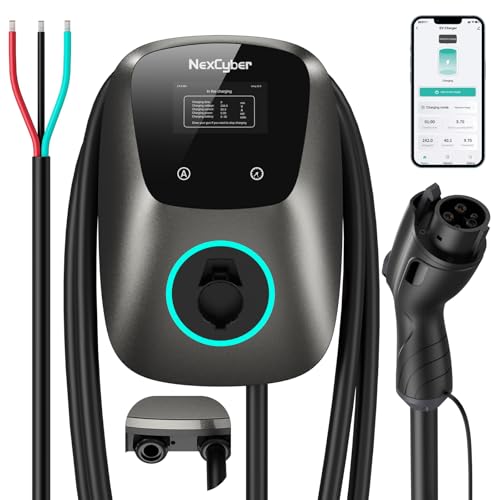
NexCyber Level 2 EV Charger 48A, WiFi, 25ft, J1772, ETL
- ✓ Fast, reliable charging
- ✓ Durable, long cable
- ✓ Intuitive Wi-Fi app
- ✕ Professional installation needed
- ✕ Not compatible directly with Tesla
| Maximum Charging Current | Up to 48A (hardwired configuration) |
| Connector Type | J1772 (North America standard) |
| Cable Length | 25 feet |
| Power Supply Compatibility | Supports input voltage compatible with standard North American outlets (likely 240V) |
| Safety Certifications | ETL, FCC, UL2231-1/-2, UL 991, UL 2251, UL1998, UL 2594 |
| Protection Rating | NEMA Type 3 (IP65 waterproof rated) |
People often assume that a home EV charger is just a box with a cable, but this NexCyber Level 2 charger really challenges that idea. The thick 25-foot cable alone hints at serious durability, and the sleek, sturdy design makes it feel like a high-end piece of equipment right out of the box.
The first thing I noticed is how solid the build feels—almost military-grade. The 48A hardwired setup is clearly designed for serious charging speeds, but you’ll want a pro to install it safely.
The touch screen is surprisingly responsive, showing all the key info like amperage, voltage, and charging status at a glance.
Using it is straightforward, thanks to the plug-and-play mode and smart Wi-Fi app. I loved being able to check charging progress from my phone, set schedules, or get alerts when my car was fully charged.
The buttons on the unit are tactile, but I found I needed to pull out the plug before pressing them—small detail, but important to know.
One of the biggest surprises was how well it handles safety. With UL, ETL, and Energy Star certifications, plus IP65 waterproofing, it feels reliable even in less-than-ideal weather.
The 25-foot cable is thick and resilient, perfect if your parking spot isn’t right next to your outlet.
Some minor quirks include the need for a NEMA Type 3 outlet, and the fact that it doesn’t fit Tesla models directly—an adapter is a must. Still, for the price and features, this charger strikes a great balance between power and convenience.
It’s definitely a solid upgrade from basic chargers.
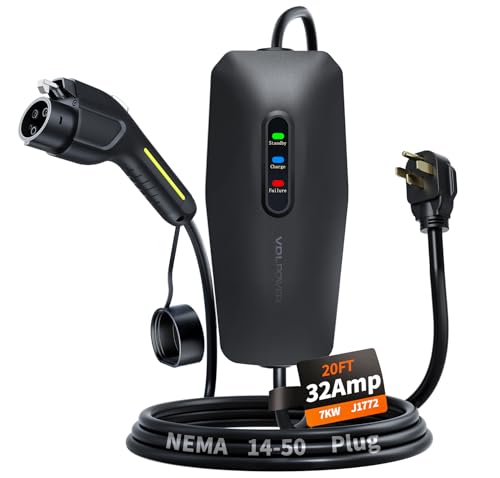
VDLPOWERVP Level 2 32A/7KW EV Charger with 20FT Cable
- ✓ Fast 7KW charging
- ✓ Easy plug-and-play setup
- ✓ Long, flexible cable
- ✕ Slightly heavy to carry
- ✕ Limited to NEMA 14-50 outlet
| Charging Power | 7kW (32A, 220V/240V) |
| Cable Length | 20 feet |
| Plug Type | NEMA 14-50 |
| Safety Protections | Lightning protection, leakage protection, FCC certified |
| Ingress Protection | IP65 (waterproof and dustproof) |
| Charging Indicators | LED status and error indicators |
Compared to the bulky, cumbersome chargers I’ve tried before, the VDLPOWERVP Level 2 charger feels like a breath of fresh air. Its sleek design and 20-foot cable make it feel like it was built with convenience in mind, especially when you’re trying to reach those tricky parking spots.
The first thing you notice is the sturdy build and the premium materials. The IP65 waterproof and dustproof control box gives you confidence that it can handle the elements.
Connecting it to a standard NEMA 14-50 outlet is straightforward — just plug in, and the LED indicators immediately tell you everything’s working smoothly.
Charging is noticeably faster with this 7kW setup. I was impressed how much time it saved compared to my old Level 1 charger.
The intelligent chip monitors everything, and the safety protections like lightning and leakage protection keep your mind at ease.
The 20-foot cable is just right — long enough to reach comfortably without being a tangled mess. The LED indicators are super helpful, especially when checking for errors or confirming a full charge.
It’s portable enough to toss in your trunk for trips or visits without fuss.
Overall, it feels reliable and efficient, making home charging less of a chore. The one-year warranty adds a layer of reassurance if anything goes wrong.
It’s a solid upgrade for anyone wanting quick, safe, and easy EV charging at home.
NexCyber Level 2 EV Charger 48A Nema 14-50p 25ft WiFi ETL

- ✓ Up to 9x faster charging
- ✓ Easy app control
- ✓ Durable, long cable
- ✕ Needs professional install
- ✕ Not compatible with Tesla directly
| Charging Current | 48A (hardwired connection), 40A (NEMA 14-50 plug) |
| Charging Speed | Up to 46 miles/hour (hardwired), up to 38 miles/hour (NEMA 14-50) |
| Connector Type | J1772 standard (compatible with North American EVs/PHEVs), requires adapter for Tesla |
| Cable Length | 25 feet |
| Certification & Safety Standards | ETL, FCC, Energy Star, SAE J1772, UL2231-1/-2, UL 991, UL 2231, UL 2251, UL1998, UL 2594 |
| Waterproof Rating | NEMA Type 3, IP65 |
Walking into my garage and seeing the NexCyber Level 2 EV Charger sitting neatly against the wall was a moment I’d been waiting for. Its sleek black design with a bright, easy-to-read touchscreen immediately caught my eye.
The 25-foot military-grade cable feels sturdy yet flexible enough for easy maneuvering. I appreciated how the plug end, built to endure over 10,000 charges, gives me confidence in its durability.
The charger’s NEMA 14-50p connector fits smoothly into my outlet, and the device’s waterproof NEMA Type 3 rating means it’s ready for the elements—though I wouldn’t leave it in the rain.
Using the touch screen was a breeze. I could see real-time info like amperage, charging speed, and voltage at a glance.
Long-pressing buttons to adjust amperage from 16A up to 48A felt intuitive, and setting the charging schedule via the Wi-Fi app was surprisingly straightforward. The app itself is a highlight—checking charging history, cost, and notifications wirelessly makes managing my EV stress-free.
The safety features, including UL and ETL certifications, reassured me during installation. I liked that professional setup is recommended to ensure optimal safety and performance.
The ability to reset the device remotely or with a factory reset option means I can troubleshoot easily without calling tech support.
Overall, this charger delivers on its promise of fast, safe, and connected charging. It’s a solid upgrade from standard outlets, making my EV charging both faster and smarter.
What Features Should You Look for in a Home EV Charger?
When selecting the best home charger for an electric vehicle, several key features should be considered for optimal performance and convenience.
- Charging Speed: The charging speed of a home EV charger is crucial as it determines how quickly your vehicle can recharge. Look for chargers with higher power output, often measured in kilowatts (kW), which can significantly reduce charging time, allowing you to fully charge your vehicle overnight or during short periods.
- Compatibility: Ensure the charger is compatible with your specific electric vehicle model. Different EVs may have varying charging port types and power requirements, so having a charger that supports your vehicle’s specifications is essential for efficient charging.
- Smart Features: Many modern home chargers come with smart features such as Wi-Fi connectivity and mobile apps. These features allow you to monitor charging status, schedule charging times, and manage energy consumption remotely, providing added convenience and control over your charging habits.
- Safety Features: Safety is paramount when dealing with electrical appliances. Look for chargers equipped with safety features such as overcurrent protection, short circuit protection, and temperature monitoring, which can prevent accidents and ensure safe operation.
- Installation Requirements: Consider the installation process and requirements of the charger. Some units may need a dedicated circuit or specific electrical upgrades, which can add to the overall cost and complexity of the installation. It’s advisable to consult with a professional electrician to understand what is needed.
- Durability and Weather Resistance: If you plan to install your charger outdoors, choose a model that is weather-resistant and built to withstand various environmental conditions. Look for chargers with a high IP rating, indicating they are protected against dust and water ingress.
- Warranty and Support: A good warranty and customer support can provide peace of mind when purchasing a home EV charger. Check the manufacturer’s warranty period and the availability of customer service, as this can be indicative of the company’s confidence in their product.
How Do Charging Speeds Differ Among Home Chargers?
Charging speeds for home chargers vary significantly based on their power output and technology.
- Level 1 Chargers: These chargers typically use a standard 120-volt outlet and offer a charging speed of about 2-5 miles of range per hour.
- Level 2 Chargers: Operating at 240 volts, these chargers can provide 10-60 miles of range per hour, making them the most common choice for home installations.
- DC Fast Chargers: While primarily used in commercial settings, these chargers can deliver up to 80% charge in 30 minutes, but they require specialized equipment and are less common for home use.
- Smart Chargers: These Level 2 chargers often come with Wi-Fi connectivity, allowing users to schedule charging times and monitor energy usage, enhancing efficiency and convenience.
Level 1 chargers are suitable for overnight charging if the vehicle is not driven much during the day, but their slow speed may not meet the needs of daily drivers. Level 2 chargers, on the other hand, are ideal for most electric vehicle owners as they provide a faster charging solution that can replenish a vehicle’s battery overnight or during the day while at home.
DC Fast Chargers are designed for rapid charging and are typically found at public charging stations; they are not usually recommended for home use due to their high installation costs and electrical requirements. Smart chargers add a layer of convenience, allowing users to optimize their charging habits and potentially reduce electricity costs by charging during off-peak hours.
What Types of Connectors Are Available for Home Chargers?
There are several types of connectors available for home chargers for electric vehicles, each designed to accommodate different vehicle models and charging speeds.
- Type 1 Connector: This is commonly used in North America and Japan and is a single-phase connector that supports up to 7.4 kW of power. It features five pins and is typically found in older electric vehicles.
- Type 2 Connector: Widely used in Europe, this three-phase connector can deliver up to 22 kW of power, making it suitable for faster charging. Its design includes seven pins, allowing for a more robust connection and compatibility with many European electric vehicles.
- CHAdeMO Connector: Primarily utilized by Japanese manufacturers, this connector supports DC fast charging and can deliver up to 62.5 kW. It’s ideal for quick charging sessions, allowing EV drivers to recharge their vehicles in under an hour.
- CCS (Combined Charging System) Connector: This connector integrates both AC and DC charging capabilities, allowing for flexible charging options. With a power delivery of up to 350 kW, CCS is becoming a popular choice for newer electric vehicles, supporting fast charging and a wide range of vehicle models.
- Tesla Connector: Tesla vehicles use a proprietary connector that allows for both AC and DC charging at varying speeds. While Tesla provides adapters for compatibility with other charging stations, its proprietary system is optimized for Tesla’s Supercharger network, offering rapid charging capabilities for Tesla owners.
How Much Should You Expect to Pay for a Home EV Charger?
Level 2 chargers provide faster charging times and are more efficient for daily use, making them a popular choice for homeowners. They require a professional installation, which can add to the upfront costs, but the investment is often justified by the convenience and efficiency they provide.
Smart chargers offer advanced features like scheduling and real-time monitoring through a smartphone app, enhancing the user experience. While they come at a premium, the added functionality can be beneficial for tech-savvy users or those looking to optimize their charging times.
Installation costs can vary widely based on the existing electrical setup in your home. If your electrical panel needs upgrading or if the charger is far from the panel, costs can rise substantially, making it essential to get a detailed estimate from a qualified electrician.
Considering rebates and incentives can significantly mitigate the financial impact of purchasing a home EV charger. It’s advisable to research local programs to take full advantage of available savings.
What Are the Benefits of Having a Home EV Charger?
The benefits of having a home EV charger are numerous, enhancing convenience, cost savings, and efficiency.
- Convenience: Having a home EV charger allows you to charge your electric vehicle overnight or whenever you are home, eliminating the need to visit public charging stations.
- Cost Savings: Home charging can often be cheaper than using public chargers, especially if you take advantage of lower electricity rates during off-peak hours.
- Time Efficiency: Charging at home saves time since you can plug in your vehicle as soon as you return, rather than waiting in line at a public charging station.
- Increased Range Confidence: With a dedicated charger at home, you can ensure your vehicle is always charged and ready to go, reducing range anxiety on longer trips.
- Value Addition to Property: Installing a home EV charger can increase the value of your property, making it more attractive to potential buyers who own electric vehicles.
- Customization and Control: A home charger allows you to choose the charging speed and schedule that fits your lifestyle, offering greater control over your vehicle’s charging habits.
Having a home EV charger significantly enhances the convenience of owning an electric vehicle, as it allows you to charge at your leisure without the hassle of seeking out public infrastructure. This setup ensures that you can start each day with a full battery, leading to more spontaneous trips without the worry of finding a charging station.
Moreover, the cost savings associated with home charging can add up over time, particularly if you can charge during off-peak hours when electricity rates are lower. This financial benefit makes the installation of a home charger an attractive option for many EV owners.
In terms of time efficiency, a home charger means you won’t have to factor in extra time for public charging stops during your errands or commutes. You can simply plug in when you arrive home, which makes for a seamless integration into your daily routine.
Additionally, having a dedicated charger at home boosts your confidence in the vehicle’s range, reducing any anxiety about running out of battery on longer journeys. Knowing that your car can be fully charged overnight allows for more flexibility in travel planning.
Installing a home EV charger also enhances the value of your property, as more buyers are looking for homes equipped with electric vehicle charging capabilities. This feature can set your home apart in a competitive real estate market.
Lastly, the customization options available with a home charger provide you with the ability to tailor the charging experience to your specific needs, whether that means adjusting the charging speed or scheduling it for certain times of the day. This level of control can lead to a more efficient and satisfying ownership experience.
How Do Installation Costs Vary for Home EV Chargers?
Installation costs for home EV chargers can vary significantly based on several factors, including the type of charger, electrical system upgrades, and labor expenses. Here’s a breakdown of the key components influencing installation costs:
-
Charger Type: Level 1 chargers, which use standard 120V outlets, are generally cheaper to install, often requiring minimal work. Level 2 chargers, operating at 240V, offer faster charging but may need specialized circuits installed, leading to higher costs.
-
Electrical Capacity: Homes may need electrical panel upgrades to handle the additional load from a Level 2 charger. If the existing panel lacks capacity, this can add several hundred dollars to the installation.
-
Distance from Power Supply: If the charger is located far from the electrical panel, additional wiring may be necessary. Longer distances increase labor and material costs.
-
Permits and Inspections: Some local regulations require permits for electrical work, incurring further costs. Inspections may also be necessary, depending on jurisdiction.
-
Labor Costs: Installation by a certified electrician typically ranges from $50 to $150 per hour, impacting overall costs depending on the complexity of the installation.
Overall, homeowners should budget between $500 to $2,000 for a complete installation, depending on these factors.
What Safety Features Are Essential in a Home EV Charger?
Essential safety features in a home EV charger ensure secure and efficient charging of electric vehicles.
- Overcurrent Protection: This feature prevents excessive current from flowing through the charger, which could lead to overheating and potential fires. It automatically shuts off the charger if the current exceeds a safe threshold, protecting both the vehicle and the home’s electrical system.
- Ground Fault Circuit Interrupter (GFCI): A GFCI detects any imbalance in the electrical current, which could indicate a leak to the ground. If a fault is detected, it quickly cuts off power to the charger, reducing the risk of electric shock and ensuring the safety of users.
- Temperature Monitoring: This feature continuously monitors the temperature of the charger and its connectors. If the temperature rises above the safe operating range, the charger will either reduce the power or shut off completely, preventing damage and potential hazards.
- Surge Protection: Surge protection safeguards the charger against voltage spikes, which can occur due to lightning strikes or power surges. This feature helps to protect internal components of the charger from damage, ensuring longevity and reliability.
- Locking Mechanism: A locking mechanism prevents unauthorized access to the charger, which is particularly important in shared or public spaces. It ensures that the charger cannot be unplugged while in use, promoting safety and security for users and their vehicles.
- Smart Connectivity: Many modern chargers come with smart connectivity features, allowing users to monitor and control charging remotely via mobile apps. This feature enables users to set charging schedules, receive notifications about charging status, and ensure safe operation from anywhere.