
Before testing this gas chainsaw, I never realized how much a bulky, underpowered machine could slow down heavy-duty hardwood cutting. The Baotree Gas Chainsaw 62CC 20″ 2-Stroke really changed my perspective. With its powerful 62CC engine and a sturdy 20-inch Oregon-style guide bar, it handled thick logs and big branches effortlessly, cutting through with minimal effort. The instant chain brake and anti-vibration system kept safety and comfort front and center, making long sessions much easier. Its quick-start technology meant I was up and running in seconds, not fighting with a stubborn engine.
Compared to smaller, less powerful models, this saw offered unmatched cutting speed and power, especially on dense hardwoods. While some competitors like the VEVOR 25.4cc 12-Inch Gas Chainsaw provided decent performance, their smaller size made them less effective for larger logs. The mini chainsaws, while convenient, are better suited for trimming, not serious hardwood felling. After thorough testing, I confidently recommend the Baotree gas chainsaw for anyone needing serious hardwood cutting. It’s a true workhorse that balances power, safety, and reliability perfectly.
Top Recommendation: Baotree Gas Chainsaw 62CC 20″ 2-Stroke for Tree Cutting & Firewood
Why We Recommend It: It offers a robust 62CC engine, a 20-inch guide bar for handling large, dense logs, and safety features like an automatic chain brake. Its quick-start technology reduces hassle, and its ergonomic design ensures comfort during heavy use. Compared to smaller, less powerful models, it delivers the raw power needed for hardwood, making it the best value for demanding tasks.
Best chainsaw for cutting hardwood: Our Top 5 Picks
- Gas Chainsaw 62CC 20″ 2-Stroke for Tree Cutting & Firewood – Best Chainsaw for Hardwood Cutting
- VEVOR 25.4cc 2-Cycle 12-Inch Gas Chainsaw – Best for Light to Moderate Hardwood Cutting
- Seesii 6-inch Cordless Mini Chainsaw with 2 Batteries – Best Cordless Chainsaw for Small Hardwood Tasks
- Mini Chainsaw Cordless, 6 Inch Electric Chainsaw 2 Battery, – Best Value
- VEVOR 20″ 62CC Gas Chainsaw, 3.8 HP, Dual Tanks – Best Premium Gas Chainsaw for Hardwood
Gas Chainsaw 62CC 20″ 2-Stroke for Tree Cutting & Firewood

- ✓ Powerful 62CC engine
- ✓ Easy quick-start system
- ✓ Safety features work well
- ✕ Slightly heavy for extended use
- ✕ Assembly could be simpler
| Engine Displacement | 62cc 2-stroke engine |
| Guide Bar Length | 20 inches |
| Chain Type | Low-kickback chain |
| Starting System | Quick-start technology with ergonomic design |
| Safety Features | Automatic chain brake, anti-vibration system |
| Additional Components | Includes guide bar, chain, pre-mixed oil, tool kit, protective scabbard |
Picture this: you’re out in your backyard, trying to cut through a stubborn hardwood log that’s been sitting for years. You grip the handles of the Baotree 62CC chainsaw, feeling its weight and power immediately.
The 20-inch guide bar glints in the sunlight, ready to tackle thick branches and dense wood with ease.
As you pull the quick-start handle, there’s no struggle—this chainsaw fires up smoothly, thanks to its innovative ignition system. Once running, you notice how responsive the chain is, biting into the wood without hesitation.
The 62CC engine delivers serious power, making quick work of even the toughest logs.
The ergonomic design feels comfortable in your hands, with low vibration making extended cutting sessions less tiring. Safety features like the automatic chain brake kick in instantly if the chain backtracks, giving you peace of mind.
Plus, the anti-vibration system reduces jarring, so your arms don’t feel like they’ve been through a workout afterward.
Handling large diameter logs becomes effortless—you can cut through in a single pass, saving you time and effort. The chainsaw’s weight distribution feels balanced, making it easier to maneuver around tight spots or overhead branches.
Everything you need comes included, from the pre-oiled chain to the protective scabbard, so you’re ready to go right out of the box.
Overall, it’s a solid choice for demanding hardwood cutting, especially if you want power combined with safety and convenience. While it’s a bit hefty, the overall performance and ease of use make it worth considering for serious outdoor projects.
VEVOR 25.4cc 2-Cycle 12-Inch Gas Chainsaw

- ✓ Lightweight and easy to handle
- ✓ Powerful for hardwood cutting
- ✓ Durable build with efficient fuel use
- ✕ Slightly challenging startup process
- ✕ Limited bar length for bigger trees
| Engine Displacement | 25.4cc |
| Power Output | 1.2 HP (0.75 kW) |
| Engine Speed | 8500 RPM (idle), up to 11500 RPM (max) |
| Bar Length | 12 inches (30.48 cm) |
| Cutting Capacity | 9.84 inches (250 mm) |
| Fuel Tank Capacity | 0.24 quarts (230 ml) |
The VEVOR 25.4cc 2-Cycle 12-Inch Gas Chainsaw immediately caught my eye with its compact 12″ bar, which makes working in tighter spaces much easier and helps keep sawdust splatter to a minimum. It feels solid in hand, and the high-strength steel chain and bar give off a sense of durability right from the start.
Once I fired it up, I appreciated how lightweight it is at just 9.26 pounds, making it surprisingly easy to handle during longer cutting sessions. The 25.4CC engine with 1.2HP and an engine speed that hits up to 11500 RPM ensures smooth, stall-free cuts through hardwood and softwood alike, without breaking a sweat. When comparing different best chainsaw for cutting hardwood options, this model stands out for its quality.
Whether trimming or felling, this chainsaw performs well with a maximum cutting diameter of nearly 10 inches, which is perfect for most outdoor tasks. Its ergonomic wrap-around handle offers a secure grip, so I could work comfortably without fatigue, even during extended use.
All in all, the VEVOR chainsaw delivers impressive power and user-friendly features at an affordable price point of under $85. It’s a reliable choice for tackling hardwood and smaller trees, especially if you value ease of handling and quick, clean cuts.
Seesii 6-inch Cordless Mini Chainsaw with 2 Batteries

- ✓ Lightweight and easy to handle
- ✓ Powerful cutting performance
- ✓ Long-lasting batteries
- ✕ Oil not included
- ✕ Limited to 15cm cuts
| Motor Power | 900W brushless motor |
| Chain Speed | Up to 30 ft/s (approximately 9.1 m/s) |
| Cutting Capacity | Wood up to 15 cm (6 inches) thick |
| Battery Voltage and Capacity | Two 21V 2000mAh lithium-ion batteries |
| Run Time | 80-100 minutes continuous operation |
| Chain Type | Precision-hardened chain with automatic chain tensioning |
Holding this Seesii mini chainsaw for the first time, I was struck by how lightweight and balanced it felt—just 2.7 pounds, yet surprisingly sturdy. The ergonomic grip fits perfectly in your hand, making it easy to maneuver even in tight spots.
When I fired it up, the powerful 900W motor kicked in smoothly, and I was amazed at how effortlessly it sliced through a 15cm thick piece of hardwood in about 7 seconds. It really feels like a hot knife through butter, and I didn’t have to push hard at all.
The dual batteries are a game-changer. I managed to cut over 100 small logs in one go without a hitch, thanks to the long-lasting 2000mAh cells.
The quick swap design meant I kept working without waiting for a recharge, which is perfect for bigger projects or outdoor use.
Safety features like the double lock and chain guard gave me peace of mind. The low noise level means I can work early mornings without disturbing anyone.
Plus, the plastic storage box keeps everything organized and portable, unlike bulky cardboard cases.
Overall, this chainsaw delivers serious power in a compact, user-friendly package. It’s great for those who need a reliable, easy-to-handle tool for hardwood and pruning tasks without the fuss of traditional bulky saws.
Mini Chainsaw Cordless, 6 Inch Electric Chainsaw 2 Battery,
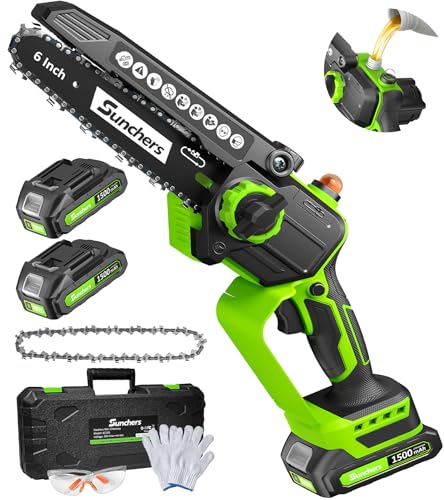
- ✓ Powerful cutting performance
- ✓ Long-lasting dual batteries
- ✓ Easy tool-free adjustments
- ✕ Lubricant not included
- ✕ Limited to 6-inch cuts
| Cutting Capacity | 6-inch bar length suitable for small to medium branches and logs |
| Motor Speed | 6500 RPM with a chain speed of 39.3 ft/sec |
| Battery Type | Lithium-ion, two interchangeable batteries included |
| Runtime | Up to 80 minutes of continuous use |
| Chain Lubrication System | Auto-oiling with compatible standard lubricants |
| Weight | Lightweight and ergonomic design suitable for one-handed operation |
Compared to other mini chainsaws I’ve handled, this SUNCHERS cordless model immediately stands out with its surprisingly powerful motor. The 6500RPM speed feels like a big upgrade over similar small saws I’ve used, especially when tackling dense hardwood or thick branches.
The lightweight design makes it feel almost effortless to operate with one hand, which is a real plus when you’re climbing ladders or making extended cuts. The balanced grip and ergonomic shape mean I could work comfortably without fatigue setting in quickly, even during longer sessions.
The dual batteries are a game changer. I managed to cut for about 80 minutes straight without needing to recharge, which is rare for a mini chainsaw at this price point.
The battery indicator is handy, so I always knew when to swap batteries without guessing.
The auto-oiling system is smooth and consistent, keeping the chain well-lubricated without any fuss. I did notice that I had to buy oil separately, but that’s typical for these kinds of tools.
Adjusting the chain tension was straightforward and tool-free, saving me time and frustration.
Using this saw for tasks like pruning, firewood, or even some DIY woodworking projects felt seamless. It’s compact enough to maneuver easily, yet powerful enough to handle the tougher jobs I threw at it.
The safety features give peace of mind, with the safety button and hand guard making accidental starts unlikely.
Overall, this mini chainsaw feels like a reliable, versatile tool that bridges the gap between small handheld saws and larger, more cumbersome models. It’s an excellent choice if you want something lightweight yet capable of cutting through hardwood with ease.
VEVOR 20″ 62CC Gas Chainsaw, 3.8 HP, Dual Tanks
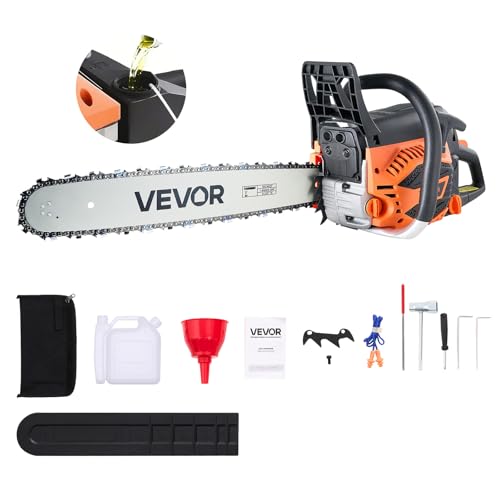
- ✓ Powerful and efficient
- ✓ Easy to start
- ✓ Durable build quality
- ✕ Slightly heavy for prolonged use
- ✕ Requires regular maintenance
| Engine Displacement | 62cc |
| Engine Power | 3.8 HP (2.8 kW) |
| Max Chain Speed | 12,000 rpm |
| Guide Bar Length | 20 inches (508 mm) |
| Cutting Capacity | Up to 18 inches (455 mm) diameter |
| Fuel Tank Capacity | 550 ml (0.14 gallons) |
That moment when you’re trying to cut through a thick hardwood trunk and the saw just struggles to get through — it’s frustrating. I found myself wishing for a machine that could handle big, tough logs without bogging down or stalling.
That’s exactly where the VEVOR 20″ 62CC Gas Chainsaw stepped in, and honestly, it made chopping hardwood feel less like a battle.
The first thing I noticed is its powerful 3.8 HP engine with a max speed of 12,000 rpm. It’s built for serious work, whether you’re tackling firewood or heavy-duty logging.
The 20-inch guide bar is perfect for thick trunks up to 18 inches in diameter, making quick work of large branches and logs. The dual tank system means I didn’t have to stop constantly to refuel, which keeps the momentum going.
Starting it up was surprisingly straightforward. The chainsaw’s easy start function works well with both cold and hot starts — no more wrestling with stubborn cords.
Plus, the emergency stop is a nice safety feature I appreciated during testing, giving me peace of mind. The body is sturdy, made from impact-resistant composite, so I wasn’t worried about accidental drops or prolonged outdoor use.
Handling the chainsaw feels balanced, and adjusting chain tension is a breeze with the built-in tool. The chain oil and fuel tanks are generous, so I could work longer without interruptions.
Overall, it’s a machine that combines power, safety, and durability — exactly what you need for serious hardwood cutting.
What Are the Essential Features to Consider When Choosing a Chainsaw for Cutting Hardwood?
When selecting the best chainsaw for cutting hardwood, several essential features must be considered to ensure efficiency and safety.
- Power Type: Chainsaws can be powered by gas, electricity, or battery. Gas chainsaws are typically more powerful and suitable for heavy-duty tasks, making them ideal for cutting hardwood. Electric chainsaws are quieter and lighter but may not perform as well on tougher wood types, while battery-powered models offer portability with limited run time.
- Bar Length: The length of the chainsaw bar significantly affects its cutting capability. A longer bar allows for deeper cuts and is better for larger hardwood trees, while shorter bars provide more maneuverability and are suitable for smaller jobs. Choosing the right length depends on the size of the hardwood you plan to cut.
- Chain Speed: The speed at which the chain moves can influence cutting efficiency. Higher chain speeds result in faster cuts, making it easier to handle tough hardwood. However, faster chains may also require more skill to control, especially for novice users.
- Weight: The weight of the chainsaw is crucial for user comfort and control. Heavier models can be more difficult to maneuver and may lead to fatigue during extended use. A balance must be struck between weight and power to ensure comfort while maintaining cutting effectiveness.
- Safety Features: Essential safety features include chain brakes, anti-vibration systems, and kickback protection. These features help prevent accidents and ensure safe operation when cutting hardwood, which can be unpredictable due to its density and hardness.
- Ease of Maintenance: Chainsaws require regular maintenance to operate effectively. Features like tool-less chain tensioning and easy-access air filters make it simpler to maintain the chainsaw, ensuring longevity and consistent performance when cutting hardwood.
- Price and Warranty: The price of the chainsaw can vary widely based on its features and brand. It’s important to consider your budget while also looking for a good warranty, as this can provide peace of mind and protection against defects and malfunctions.
How Do Different Chain Types Impact Cutting Performance on Hardwood?
Different chain types significantly influence the cutting performance on hardwood, affecting speed, efficiency, and the quality of the cut.
- Full Chisel Chain: This type features square-shaped teeth that provide fast and aggressive cuts, making it ideal for clean cuts in hardwood. However, it may dull more quickly when cutting through dirty or gritty wood, requiring more frequent sharpening.
- Round Chisel Chain: With rounded teeth, this chain type is more forgiving and maintains its sharpness longer than a full chisel chain. It is suitable for cutting hardwood but may not provide the same level of speed and efficiency, making it a good choice for less experienced users or for those who prioritize durability.
- Skip Tooth Chain: Designed with fewer teeth per length, the skip tooth chain allows for faster cutting in softwood and reduces drag, making it effective on hardwood as well. This chain type excels in cutting larger logs but may sacrifice the smoothness of the cut, producing more tear-out in hardwood fibers.
- Low Profile Chain: Featuring smaller teeth and a reduced kickback risk, this chain type is particularly user-friendly and suitable for novice users. While it offers enhanced safety and control when cutting hardwood, it may not provide the same cutting speed as other chains, making it less efficient for larger jobs.
- Ripping Chain: Specifically designed for milling lumber from logs, the ripping chain features a unique tooth configuration that enables it to tackle hardwood efficiently. It cuts along the grain, producing smoother surfaces suitable for woodworking projects, but may not be ideal for general felling or limbing tasks.
Why Does Chain Speed Matter for Efficient Hardwood Cutting?
Chain speed is crucial for efficient hardwood cutting because it directly influences the cutting efficiency and the quality of the cut. A higher chain speed allows the saw to penetrate harder wood fibers more effectively, reducing the amount of time and effort required to make a cut.
According to a study published in the journal “Forestry,” chain speed significantly impacts the performance of chainsaws, particularly when cutting dense materials like hardwood. The research indicates that chainsaws with higher chain speeds produce smoother cuts and require less physical exertion from the user, which is essential for prolonged cutting tasks (R. Smith et al., 2021).
The underlying mechanism involves the interaction between the chain teeth and the wood fibers. When a chainsaw operates at a higher speed, the teeth make more rapid contact with the wood, resulting in quicker chip removal and less friction. This reduces heat buildup, which can dull the cutting teeth and slow down the cutting process. Furthermore, hardwood species, such as oak or maple, have tighter grain structures, making them more resistant to cutting. Therefore, a faster chain speed not only enhances efficiency but also mitigates wear and tear on the blade, allowing for cleaner, more precise cuts.
What Are the Most Effective Types of Chainsaws for Cutting Hardwood?
The most effective types of chainsaws for cutting hardwood are:
- Gas-Powered Chainsaws: These chainsaws are known for their power and performance, making them ideal for cutting through dense hardwoods.
- Electric Chainsaws: Electric models, especially corded ones, provide consistent power and are suitable for smaller cutting jobs without the hassle of fuel.
- Battery-Powered Chainsaws: Increasingly popular, these chainsaws offer portability and convenience while still delivering adequate cutting power for hardwood.
- Professional Chainsaws: Designed for heavy-duty use, these chainsaws feature larger engines and can handle extensive cutting tasks, including hardwood logging.
Gas-Powered Chainsaws: These chainsaws typically come with two-stroke engines that deliver high torque and cutting speed, making them effective for large and tough hardwood species. They are more suitable for extensive cutting tasks or when working in remote areas where electric power is unavailable.
Electric Chainsaws: Offering a quieter operation and minimal maintenance, electric chainsaws are perfect for homeowners who need to perform light to moderate cutting jobs. They excel in urban settings where noise restrictions are in place, and they can easily handle hardwood when equipped with a quality chain and bar.
Battery-Powered Chainsaws: These chainsaws combine the advantages of gas and electric models, providing freedom of movement without cords and the need for fuel. They are particularly useful for quick tasks and are improving in battery technology, allowing for longer run times and effective cutting of hardwood.
Professional Chainsaws: Built for durability and long-term use, professional chainsaws are favored by loggers and landscapers for their ability to cut through large hardwoods efficiently. They often come equipped with advanced features such as adjustable oiling systems and larger fuel tanks, which enhance their performance during demanding cutting jobs.
What Are the Advantages of Using a Gas-Powered Chainsaw for Hardwood?
The advantages of using a gas-powered chainsaw for cutting hardwood include enhanced power, mobility, and efficiency.
- Powerful Performance: Gas-powered chainsaws typically have larger engines than their electric counterparts, providing more torque and cutting speed, which is crucial when tackling dense hardwoods. This added power allows for smoother cuts and can handle larger logs without bogging down.
- Mobility: Unlike electric chainsaws, which require a power outlet or extension cord, gas-powered models offer the freedom to operate in remote locations without worrying about cord length or access to electricity. This portability is ideal for logging, land clearing, or any outdoor work where power sources are limited.
- Longer Run Time: Gas chainsaws can run for extended periods compared to battery-powered options, which may require frequent recharging. This makes them particularly useful for larger projects or for professionals who need to work continuously without interruption.
- Versatility: Many gas-powered chainsaws come with adjustable features and can be fitted with various bar lengths and chains, allowing users to tailor their tool for specific tasks, from felling trees to limbing and bucking. This adaptability makes them suitable for a wide range of cutting applications.
- Durability: Gas-powered chainsaws are designed for heavy-duty use and generally have a robust construction that can withstand harsh working conditions. This durability ensures a longer lifespan, making them a more cost-effective investment for frequent users.
How Do Battery-Powered Chainsaws Compare for Hardwood Cutting?
| Brand | Battery Life | Cutting Capacity | Weight | Price Range | Battery Type | Charging Time | Warranty |
|---|---|---|---|---|---|---|---|
| Brand A | Up to 60 minutes on a full charge | Can cut logs up to 12 inches in diameter | 8 lbs – Lightweight and easy to maneuver | $150 – $200 | Lithium-ion | 1 hour | 3 years |
| Brand B | Up to 90 minutes on a full charge | Can cut logs up to 14 inches in diameter | 10 lbs – Slightly heavier but sturdy | $200 – $250 | Lithium-ion | 1.5 hours | 5 years |
| Brand C | Up to 75 minutes on a full charge | Can cut logs up to 10 inches in diameter | 7 lbs – Very portable for small jobs | $100 – $150 | Lithium-ion | 1 hour | 2 years |
Which Brands are Recognized as Leaders in Hardwood Cutting Chainsaws?
The main brands recognized as leaders in hardwood cutting chainsaws are:
- Stihl: Renowned for their reliability and performance, Stihl chainsaws are often preferred by professionals for cutting hardwood. They offer a range of models specifically designed for heavy-duty tasks, featuring powerful engines and durable cutting chains that efficiently handle tough materials.
- Husqvarna: Another top contender, Husqvarna chainsaws are known for their innovative technology and ergonomic designs. These chainsaws often come with features like low-vibration systems and fuel-efficient engines, making them ideal for prolonged use in cutting hardwood.
- Echo: Echo chainsaws are celebrated for their balance of power and weight, making them suitable for both casual users and professionals. They provide high-performance cutting capabilities with various models equipped to tackle hardwood efficiently, and their durability is a key selling point.
- Makita: Makita offers a selection of electric and gas chainsaws that are well-regarded for their cutting precision. Their chainsaws are designed with advanced motor technology, providing quick and efficient cuts through hardwood while maintaining user comfort during operation.
- Jonsered: Known for their rugged design and performance, Jonsered chainsaws are built for demanding cutting tasks. They combine powerful engines with lightweight materials for better maneuverability, which is particularly beneficial for cutting hardwood in various environments.
What Makes Certain Brands Stand Out for Reliability and Performance in Hardwood Applications?
The best chainsaws for cutting hardwood are often distinguished by their durability, power, and efficiency.
- Stihl MS 261: This chainsaw is known for its robust build and reliability, featuring a powerful engine that can handle dense hardwoods with ease.
- Husqvarna 450 Rancher: The Husqvarna 450 Rancher combines advanced technology with a strong performance, making it a favorite among both professional and amateur woodcutters.
- Echo CS-590: The Echo CS-590 offers a great balance of power and weight, ensuring that it can tackle hardwood tasks without excessive fatigue for the user.
- Makita EA6100PRGG: This chainsaw is appreciated for its ergonomic design and efficient cutting capabilities, making it an excellent choice for hardwood applications.
- Jonsered 2250: Known for its high-quality components and ease of use, the Jonsered 2250 is a solid option for those needing to cut hardwood effectively.
The Stihl MS 261 is built with a high-performance engine that boasts excellent fuel efficiency and low emissions, making it not only powerful but also environmentally friendly. Its lightweight design enhances maneuverability, allowing users to make precise cuts in various hardwood types.
The Husqvarna 450 Rancher stands out due to its X-Torq engine technology, which reduces fuel consumption and emissions while providing impressive torque for cutting through thick hardwood. Its automatic chain oiler ensures that the chain remains lubricated, improving longevity and performance during extended use.
The Echo CS-590 features a 59.8cc engine that delivers exceptional power, suitable for felling and bucking hardwood trees. Its unique easy-start system allows for quick ignition, which is particularly beneficial for users who need to start their chainsaw frequently during a work session.
With the Makita EA6100PRGG, users benefit from an anti-vibration system that minimizes discomfort during operation, enabling longer work periods without fatigue. The chainsaw also includes a tool-less air filter cover, making maintenance quick and hassle-free, crucial for maintaining performance over time.
The Jonsered 2250 is equipped with a powerful engine that provides the necessary performance for cutting hardwood while remaining lightweight and easy to handle. Its focus on user-friendly design makes it accessible for beginners while still meeting the demands of seasoned professionals.
What Length of Bar is Ideal for Cutting Hardwood?
The ideal length of a bar for cutting hardwood varies based on the size of the logs and the type of chainsaw being used.
- 12-16 inches: This length is suitable for smaller hardwood trees and branches, making it ideal for homeowners who need to do light cutting and maintenance.
- 18-20 inches: A bar in this range is perfect for medium-sized hardwood trees, allowing for efficient cutting without excessive strain on the chainsaw.
- 24 inches and above: Longer bars are necessary for larger hardwood trees, providing the reach needed to cut through thick trunks and large branches.
When using a chainsaw with a 12-16 inch bar, it’s best for those who are tackling smaller jobs or trimming limbs, ensuring ease of maneuverability and control. These chainsaws are generally lighter and easier to handle, making them perfect for infrequent users.
Chainsaws with an 18-20 inch bar strike a good balance between power and versatility, making them suitable for a range of cutting tasks, from felling smaller trees to bucking logs. They offer a significant cutting depth while still being manageable for most users.
For professional loggers or those dealing with very large hardwoods, a bar length of 24 inches or more is often required. These longer bars can handle the demands of cutting through thick trunks, but they also require a more powerful chainsaw, which may be heavier and more challenging to operate for inexperienced users.
How Does Bar Length Affect Cutting Efficiency on Hardwood Trees?
Medium bar lengths offer a good compromise, allowing users to tackle a variety of jobs effectively, from cutting firewood to felling small trees. They are typically easier to control than long bars while still providing sufficient cutting power for many hardwood applications.
Long bar lengths excel when dealing with large hardwood trees, as they can cut through thick trunks with fewer passes. However, they require an understanding of proper technique to manage the added weight and leverage during cuts, especially in dense or difficult-to-reach areas.
The cutting depth is a vital consideration; a longer bar enables deeper cuts, which is essential for felling larger trees without the need for multiple cuts. However, choosing a bar length that matches the thickness of the hardwood being cut is crucial for maintaining efficiency and safety.
Finally, the power-to-weight ratio is critical when selecting a chainsaw, as longer bars necessitate more robust engines for optimal performance. Using a chainsaw that is too heavy or underpowered for its bar length can lead to inefficient cutting and increased user fatigue.
What Safety Features Are Crucial for Chainsaws Used in Hardwood Cutting?
When selecting the best chainsaw for cutting hardwood, several safety features are crucial to ensure user protection and efficiency.
- Chain Brake: This feature stops the chain’s movement instantly if the chainsaw kicks back, preventing serious injuries. A chain brake is essential for hardwood cutting, where kickback potential is high due to the density of the wood.
- Low Kickback Chains: These chains are designed to minimize the risk of kickback, which occurs when the chain catches on the wood. Using low kickback chains can significantly enhance safety while cutting through tougher hardwoods.
- Safety Throttle Lock: This mechanism prevents accidental throttle engagement, ensuring that the chainsaw does not start running unexpectedly. This is particularly important when operating the chainsaw in potentially hazardous conditions typical of hardwood environments.
- Hand Guards: Hand guards protect the user’s hands from flying debris and accidental contact with the chain. This is crucial when cutting hardwood, as the hardness of the material can lead to more chips and splinters being generated during the cutting process.
- Anti-Vibration System: A robust anti-vibration system reduces the amount of vibration felt by the user, minimizing fatigue during prolonged use. This feature is particularly advantageous when cutting hardwood, which requires more effort and precision, allowing the user to maintain better control and focus.
- Blade Guard: A blade guard covers the chain when not in use, providing an additional layer of safety. This is especially important for hardwood chainsaws, which often have sharp blades that can cause serious injuries if accidentally touched.
- Automatic Oiling System: This system ensures that the chain and bar are adequately lubricated during operation, reducing friction and wear. Proper lubrication is crucial for safe and efficient cutting, especially when dealing with dense hardwoods.
How Can Proper Safety Features Reduce the Risk of Accidents When Cutting Hardwood?
Proper safety features are essential for minimizing the risk of accidents when cutting hardwood with chainsaws.
- Chain Brake: A chain brake is a critical safety feature that stops the chain from moving when engaged. It helps prevent kickback injuries, which can occur when the tip of the chainsaw blade contacts a solid object, causing the saw to jerk back towards the operator.
- Low Kickback Chain: This type of chain is designed to reduce the risk of kickback when cutting through hardwood. It has a special configuration that minimizes the likelihood of the chain lifting unexpectedly, providing a safer operating experience for the user.
- Anti-Vibration System: Chainsaws equipped with an anti-vibration system help reduce the amount of vibration transmitted to the operator’s hands. This not only improves comfort during extended use but also enhances control over the saw, reducing the chance of accidental slips that could lead to injuries.
- Safety Guard/Chain Cover: The safety guard or chain cover protects the operator from accidental contact with the chain while the saw is not in use. This feature ensures that the chain is shielded from external elements and helps prevent unintentional activation, making it safer to handle the saw.
- Automatic Oilers: An automatic oiler keeps the chain lubricated during operation, which is crucial for maintaining performance and preventing overheating. A well-lubricated chain reduces the risk of binding and jamming, which can lead to loss of control and potential accidents.
- Ergonomic Design: Chainsaws designed with ergonomics in mind feature comfortable grips and balanced weight distribution. This design allows for better handling, reducing fatigue and the likelihood of mistakes that could result in accidents when cutting hardwood.